


Step into Ningbo, a dynamic coastal city in eastern China where over 7,000 years of history blend seamlessly with modern innovation. Stroll along the charming Old Bund, explore ancient temples like Baoguo Temple, or relax by the serene Dongqian Lake. As home to one of the world’s busiest ports and a thriving industrial hub, Ningbo pulses with opportunity and energy. Adventure, culture, and opportunity converge here—savor fresh seafood, wander vibrant cultural streets, and experience a city that celebrates both tradition and progress. For travelers, entrepreneurs, and culture enthusiasts alike, Ningbo promises unforgettable experiences at every turn.
Ningbo Lishe International Airport (NGB) serves domestic and some international routes. Taxis and ride-hailing are available.
High-speed rail links Ningbo Railway Station directly with Shanghai and many other major cities across China.
Travelers from countries that require a visa may need to apply before flying to Ningbo. Please check with your local immigration authorities for the latest requirements.
Taxis are readily available throughout Ningbo and offer a convenient way to travel. Ride-hailing apps such as DiDi are widely used and reliable amongst the Chinese. To ensure smooth communication, it’s best to have your destination written in Chinese to show the driver.
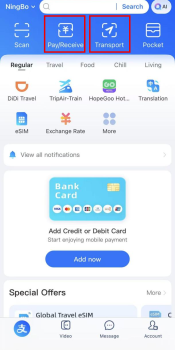
Ningbo’s metro and bus network connects all major districts and attractions, making it easy to get around the city. Passengers typically use a transit card or simply scan QR code (Alipay/Wechat Pay) for payment.
Take bus 1, 8, 13, 19, 20, 331, 352, 370, or 541 and get off at Laowaitan Stop (老外滩站).
Nearest metro station: Waitan Bridge (外滩大桥)
Take line 2 to Waitan Bridge. Exit from Exit C, walk about 200m to the east to reach the attraction.
Take bus 9, 26, 371, or 512 and get off at Tianyige Yuehu Lake Scenic Area Stop (天一阁·月湖景区).
Nearest metro station: Ximenkou (西门口)
Take line 1 to Ximenkou. Exit from Exit D, walk about 450m to the south to reach the museum.
Take bus routes 906, 902, 903, 905, 106, 620 to Dongqian Lake Town.
Take bus route 901 to reach Taogong Island and Xiaoputuo Scenic Area.
Take bus route 960 to access Fuquan Mountain Scenic Area
Take the lakeside loop bus route 966 to reach most lakeside attractions
International eSIMs work in most unlocked phones. Local SIMs could be purchased at the airport (passport required).
Ningbo, China, stays on China Standard Time (UTC+8) year-round
Credit cards are increasingly accepted. Mobile payments via WeChat Pay, Alipay are more common. Prepare some cash (CNY) for small purchases.

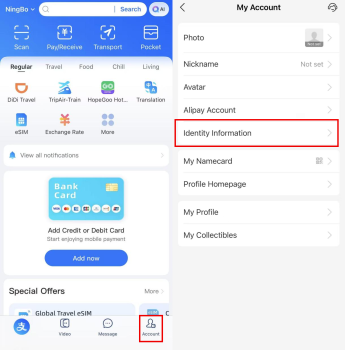
*If it shows that you need to finish Identity Information, please click “Account” and go to “Identity Information” to set it up by verifying your passport.
1. SanJiang @ Sunday Plaza (赛德⼴场)
Address: 宁波市鄞州区钱湖南路 638 号
2. Walmart @ Wanda Plaza (万达⼴场)
Address: 宁波市鄞州区四明中路 999 号
3. HuaRunWanJia @ Incity (印象城)
Address: 宁波市鄞州区钱湖北路 288 号
4. Metro @ Near Incity
Address: 鄞州区麦德龙路 1 号
1. Wanda Plaza 万达⼴场
Address: 宁波市鄞州区四明中路 999 号
2. Incity 印象城
Address: 宁波市鄞州区钱湖北路 288 号
3. Romon U City 环球银泰城 (closest to Campus)
Address: 宁波市鄞州区天童南路 1088 号
4. Tianyi Square 天一广场 (the most popular shopping mall in Ningbo)
Address: 宁波市海曙区中⼭东路188号

HIGHER EDUCATION PLANNING IN ASIA (HEPA) ASSOCIATION
Registered under the Registry of Societies Singapore.
UEN: T17SS0240
HEPA Secretariat
Blk 264 Toa Payoh East, Singapore 310264, Singapore
Copyright 2025 © HIGHER EDUCATION PLANNING IN ASIA (HEPA) ASSOCIATION. All Rights Reserved. | By MediaPlus Digital